

35 Higher or Lower Winter Trivia: How Well Do You Know The Season?
How fast do snowflakes fall? How tall was the largest snowman ever built?
Decide if the winter trivia should be higher or lower to win this creative game!
There’s no buzzer and no pressure. Just gut instinct, wild guesses, and plenty of laughs when someone is way off.
It’s simple enough for kids, competitive enough for adults, and the perfect way to settle who’s the real winter know-it-all in your family.
Grab your guesses, pick a side, and let the showdown begin!
This family-friendly winter higher-or-lower game is perfect for:
- winter family game nights
- school winter parties or classroom activities
- road trips
- group home activities for seniors
- winter break at home
- winter youth group
- office winter parties
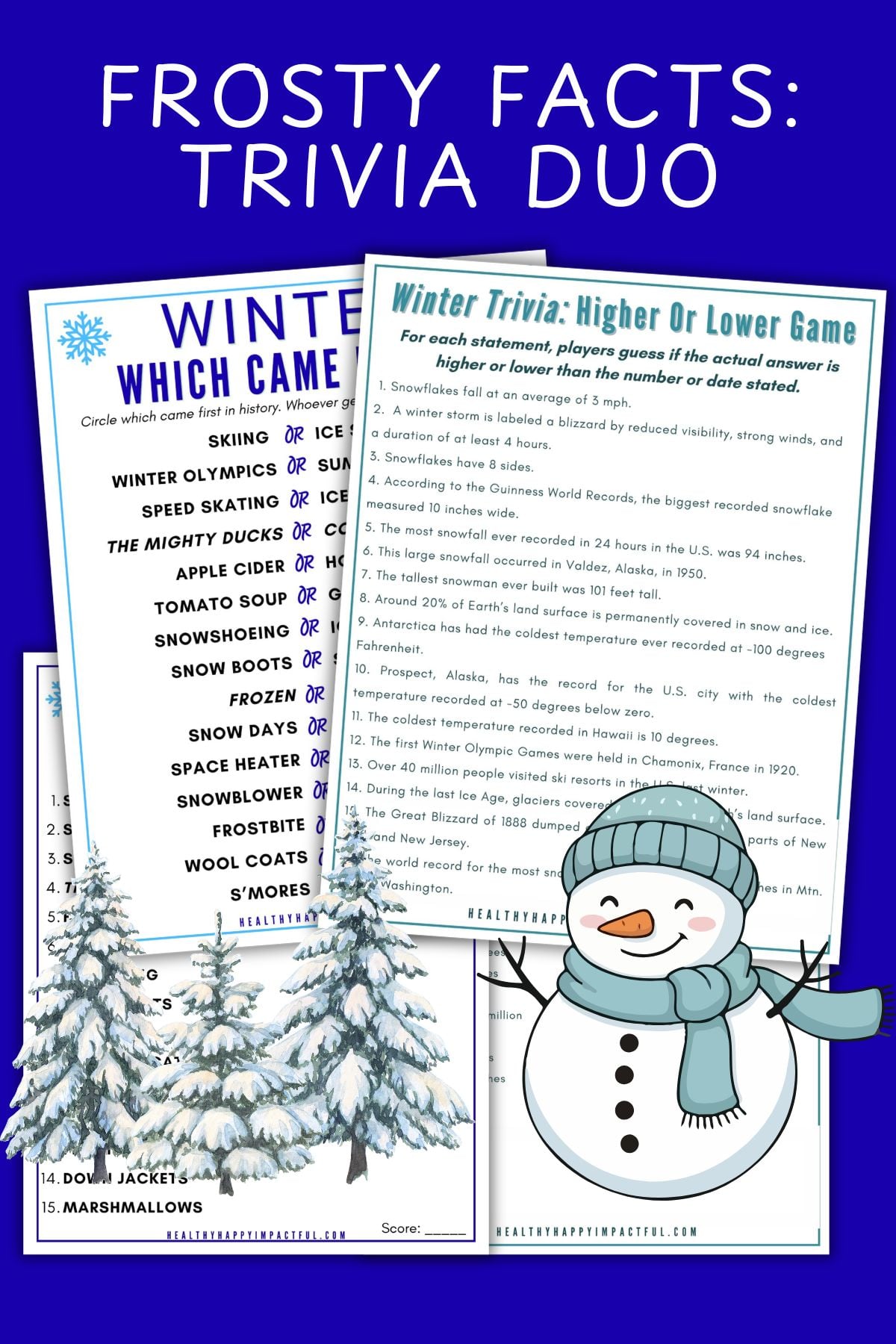
Play free instantly. No signup. Just scroll to the questions below and go! Want a way to play without screens? Grab the printable game version here.
How to Play Higher or Lower Winter Trivia
1. One person reads each question aloud. (Use the post below or snag the PDF to make it screen-free and ad-free.)
2. For each statement, players guess if the actual answer is higher or lower than the number or date stated.
3. Award one point for each correct answer. The player or team with the most points at the end wins!
Fun way to keep score: Each player gets an empty mug to start the game. For every right answer, drop in a mini marshmallow, and the first to fill their mug (or reach 10) wins!
35 Winter Trivia Game Questions
Each statement is false. But is the actual number higher or lower? It’s time to find out!
1. Snowflakes fall at an average of 3 mph.
2. A winter storm is labeled a blizzard by reduced visibility, strong winds, and a duration of at least 4 hours.
3. Snowflakes have 8 sides.
4. According to the Guinness World Records, the biggest recorded snowflake measured 10 inches wide.
5. The most snowfall (recognized by the National Climate Extremes Committee) recorded in 24 hours in the U.S. was 94 inches.
6. This large snowfall occurred in Silver Lake, Colorado, in 1950.
7. The tallest snowman ever built was 101 feet tall.
8. Around 20% of Earth’s land surface is permanently covered in snow and ice.
9. Antarctica has had the coldest temperature ever recorded at -100 degrees Fahrenheit.
10. Prospect, Alaska, has the record for the U.S. city with the coldest temperature recorded at -50 degrees below zero.
11. The coldest temperature recorded in Hawaii is 10 degrees.
12. The first Winter Olympic Games were held in Chamonix, France, in 1920.
13. Over 40 million people visited ski resorts in the U.S. last winter.
14. During the last Ice Age, glaciers covered about 40% of Earth’s land surface.
15. The winter solstice is on December 23rd most years.
16. The Great Blizzard of 1888 dumped over 40 inches of snow in parts of New York and New Jersey.
17. The world record for the most snowfall in a single year is 1,123 inches in Mtn. Baker, Washington.
18. Fresh snow is about 80% air. That’s why it’s so fluffy and quiet.
19. Earth is actually about 1 million miles closer to the sun in early January than in July.
20. The last Winter Olympics held in the United States was held in 2010 in Salt Lake City, Utah.
21. The North and South Poles each get about 5 months of darkness in a row.
Answer: Higher: 6
22. Fresh snow reflects up to 70% of sunlight, which is why you can get sunburned while skiing.
Answer: Higher: 90%
23. The average winter temperature at the South Pole is around −55°F.
Answer: Lower: −76°F
24. Water expands by about 11% when it freezes, which is why pipes can burst in winter.
Answer: Lower: 9%
25. Antarctica holds about 70% of all the ice on Earth.
Answer: Higher: 90%
26. On average, about 15 inches of snow melts down to 1 inch of water.
Answer: Lower: 10 inches of snow melts to 1 inch of water.
27. Snowboarding became an official Winter Olympic sport in 2003.
Answer: Lower: 1998
28. Sweden’s Icehotel has been rebuilt from scratch every winter since 1969.
Answer: Higher: 1989
29. Male emperor penguins keep their eggs warm for about 3 months in Antarctic winter without eating.
Answer: Lower: 2 months
30. Punxsutawney, Pennsylvania, has celebrated Groundhog Day every February 2 since 1880.
Answer: Higher: 1887
31. Arctic foxes can survive temperatures as low as −88°F.
Answer: Higher: −58°F
32. Wood frogs can survive with up to 55% of the water in their bodies frozen solid.
Answer: Higher: 65%
33. Polar bears have a layer of fat up to about 3 inches thick to keep them warm.
Answer: Higher: 4 inches
34. Some bears can hibernate for up to 9 months without eating or drinking.
Answer: Lower: 7 months
35. A hibernating groundhog’s heart rate drops from about 80 beats per minute to about 10.
Answer: Lower: 5
Related:
Winter Higher or Lower Trivia Printable Game
Print this fun PDF winter higher or lower trivia game in our store to make the game screen-free. Players get a point for every one they guess correctly!
“Thank you so much for your trivia. Been looking for a game to play that’s not only for adults but kids too.” – Jen
Related:
- Winter Trivia Game Board
- Fun Winter Categories Game
- Best Winter Games to Play
- Free Who Is Most Like a Snowman Game
What’s Next?
Then, don’t miss the free Newsletter packed with helpful family connection and routine resources!